
Tsopela Beach | The Ultimate Escape into Nature in Samos
🏖️ Tsopela Beach, Samos
A secluded pebble beach on the wild southern coast of Samos
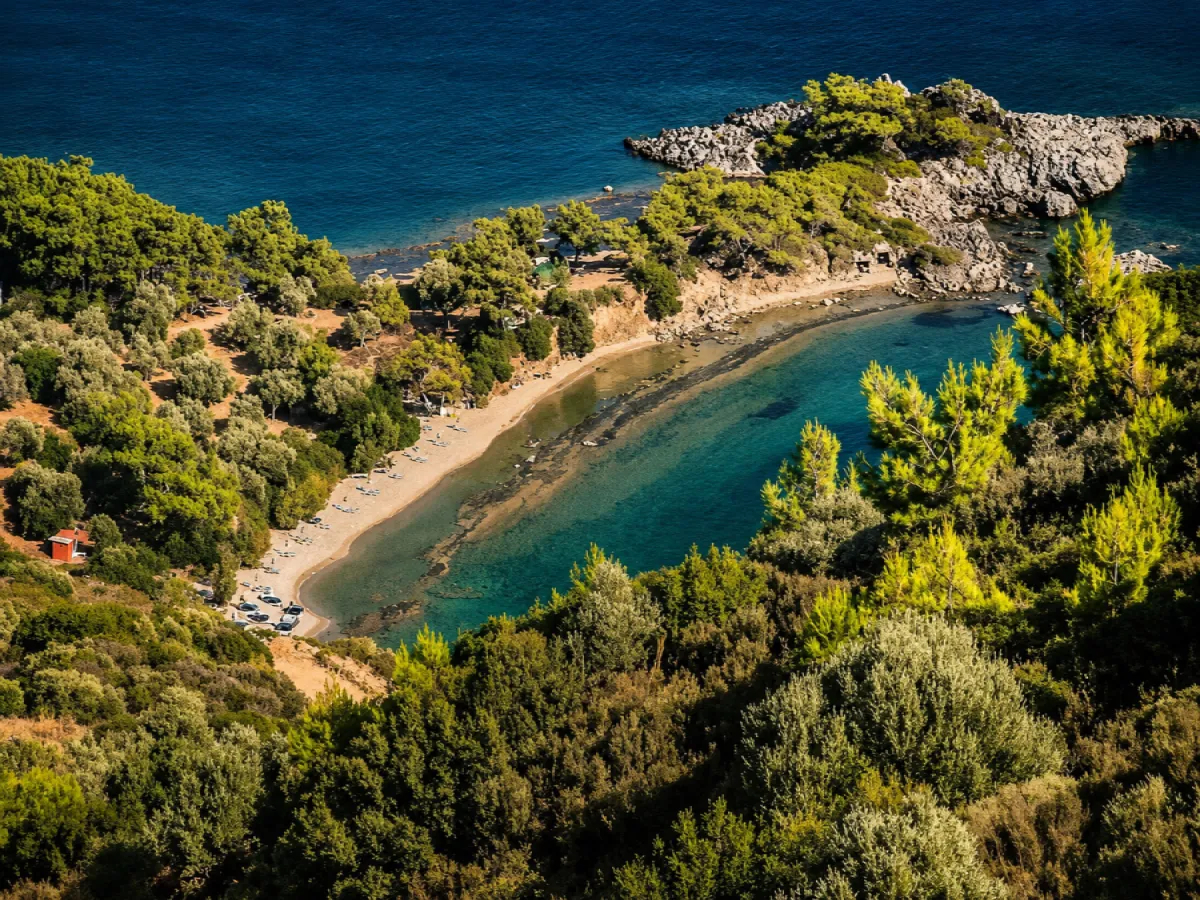
Tsopela is a small and secluded beach on the southern side of Samos, along a sparsely inhabited coastline beneath the mountainous area of Spatharaioi. The small bay is surrounded by rocky slopes, low Mediterranean vegetation and scattered pine trees, creating a landscape that is noticeably different from the organised beaches near the island’s larger tourist resorts.
The main beach is approximately 100 metres long and is covered mainly with pebbles and small rounded stones. The water is clear, with blue and turquoise shades, while the bay is relatively well protected from northerly winds. Its isolation, difficult access and lack of dense development have helped preserve the natural character of the area.
📍 Location
Tsopela Beach is located approximately 10.5 kilometres south of the village of Spatharaioi, in the wider Pythagoreio area and opposite the sea zone around the small island of Samiopoula. It has no geographical connection with Marathokampos, although some older or inaccurate online listings incorrectly place it in southwestern Samos.
The beach lies approximately 18 kilometres west of Pythagoreio and around 29 kilometres southwest of Samos Town. These distances are indicative because the final part of the route is not a normal paved road, and the actual driving time is considerably longer than the distance in kilometres might suggest.
🗺️ The landscape of southern Samos
The route to Tsopela descends from the mountainous interior towards one of the least developed coastal areas of the island. The landscape combines steep slopes, olive groves, pine trees, low shrubs, dry grasses and rocky formations that reach almost to the sea.
From the higher points of the road, impressive views open across the bay, the southern Aegean and Samiopoula. The scenery along the route is an important part of the experience in itself, but drivers should not become distracted, as the dirt road includes narrow and uneven sections.
🌊 The coast and the sea
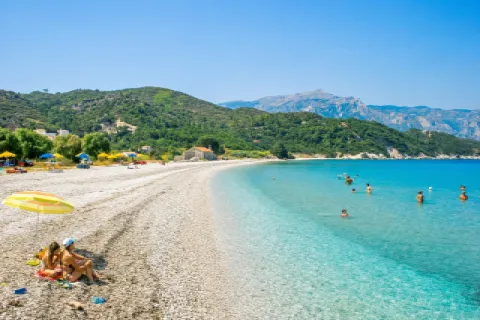
The main beach consists primarily of pebbles, small rounded stones and, in places, larger rocks. It is not a sandy beach, although small deposits of coarse sand or finer material may appear in certain areas depending on winter waves and sea conditions.
The water is usually clean and transparent. Protection from northerly winds often helps the bay remain calm, but this does not mean the sea is always completely still. Southerly winds, changes in weather or passing boats may create waves.
The depth increases at a moderate rate, but the seabed is not completely even. In some areas there are stones and natural rock slabs, making water shoes useful, especially for children or people who find it difficult to walk over pebbles.
🤿 Swimming and snorkelling
The clarity of the water and the rocky edges of the bay create interesting conditions for snorkelling when the sea is calm. Close to the rocks, visitors can observe the stony seabed and the small marine life of the area.
There is, however, no lifeguard or organised supervision. Anyone swimming farther from the shore should take into account the wind, currents, passing boats and the fact that the beach is located far from immediate emergency services.
🌲 Natural shade
There are several pine trees and other trees in the area that may offer limited natural shade, mainly near the edges of the beach. Natural shade does not cover the entire coastline, however, and the available shaded spots may already be occupied during busier hours.
Visitors should bring a beach umbrella or another form of sun protection. Relying entirely on the shade of the rocks is not advisable, as small stones may occasionally become loose and the shaded area changes position throughout the day.
🏖️ Organisation and available facilities
Available sources do not fully agree regarding the organisation of the beach. Some describe it as completely unorganised and without facilities, while official tourism information for Samos mentions that a small number of sun loungers and umbrellas may sometimes be available. This probably refers to limited or seasonal activity rather than a permanently organised beach.
For the Go Samos listing, it is safer to describe Tsopela as an unorganised beach with possible limited seasonal services, without giving visitors the impression that sun loungers, toilets, shops or food services will definitely be available.
Visitors should not rely on finding drinking water, food or other facilities. They need to carry everything they require, particularly on days when no organised boat excursions are visiting the beach.
🍽️ Food and drinking water
There is no confirmed permanent taverna or canteen that can be considered a reliable daily facility of the beach. Limited seasonal activity or excursion boats providing food for their own passengers are occasionally mentioned, but these should not be confused with publicly available and permanently operating services.
Visitors should bring:
💧 Plenty of drinking water
🥪 Food or a light snack
☂️ A beach umbrella
🧴 Sunscreen
🧢 A hat
👟 Closed shoes for the dirt road or any necessary walking
👡 Water shoes for the pebbles and stones
🗑️ A bag for carrying away all rubbish
🚗 Road access
Road access is via the Pagonadas–Spatharaioi route. From the Spatharaioi area, visitors follow the road towards the southern coast. The final section, approximately seven kilometres long, is an unpaved dirt road. The total distance from Spatharaioi to the beach is estimated at around 10.5 kilometres.
The dirt road may include:
🪨 Large stones and loose surfaces
🕳️ Potholes and erosion channels
↔️ Narrow sections with limited passing space
↘️ Steep uphill and downhill sections
🌧️ Significant damage following heavy rainfall
Its condition may change from year to year. Official tourism information recommends access with a 4×4 vehicle, while recent visitor reports describe the road as rough and unsuitable for low conventional cars.
⚠️ What type of vehicle is required
The safest choice is a four-wheel-drive vehicle or one with sufficient ground clearance. A small, low city car may strike the road surface underneath, suffer tyre damage or struggle on steep and loose sections.
Before setting out:
📞 Ask locally about the current condition of the road.
⛽ Make sure you have enough fuel.
🛞 Check the tyres and spare wheel.
📍 Download the map for offline use.
🌧️ Avoid the route after heavy rainfall.
🌙 Do not plan to return after sunset unless you know the road well.
🅿️ Parking
There are a limited number of places near the beach where vehicles can be parked, but this is not a large or officially organised municipal parking area. Vehicles must be parked without blocking the road, preventing other drivers from turning around or damaging the surrounding vegetation.
On days when more vehicles are present, visitors may need to park higher up and walk a short distance to the beach.
⛵ Access by sea
Tsopela is also known as a destination for boat excursions. Boats and traditional excursion vessels approach the area from Pythagoreio, while trips from Ormos Marathokampos and Votsalakia may combine Tsopela with other parts of the southern coast or Samiopoula.
Access by boat avoids the difficult dirt road but depends on:
🌬️ Weather conditions
🌊 Sea conditions
📅 Excursion schedules
👥 Available passenger capacity
⚓ The possibility of safely approaching the bay
An organised excursion does not necessarily mean that passengers will always disembark directly onto the beach. Some boats stop for swimming from the vessel or remain anchored within the bay.
👨👩👧👦 Is it suitable for families?
The sea may be calm and the bay relatively sheltered, but Tsopela is not the easiest choice for families with very young children.
The main reasons are:
❌ The long and difficult dirt-road journey
❌ The absence of permanent facilities and services
❌ The lack of a lifeguard
❌ The pebbly and occasionally rocky ground
❌ The distance from settlements and immediate medical assistance
Families with older children who are familiar with this type of excursion may choose the beach, provided they have a suitable vehicle, complete supplies and favourable weather conditions.
🥾 Hiking and exploration
The area is suitable for exploring the wild southern coastline, but it should not be treated as an easy or organised hiking route. During summer, temperatures are high, natural shade is limited and the terrain is rough.
Anyone choosing to walk part of the route should carry:
👟 Suitable hiking shoes
💧 More water than they initially expect to need
🧭 A map or offline GPS application
📱 A fully charged mobile phone
☀️ An early-morning departure
🚫 Avoidance of hiking during midday hours
The seven-kilometre dirt road should not be described as a “short path”. It is a long and exposed route that becomes particularly demanding in the summer heat.
📸 Photography and views
The best overall view of Tsopela appears before the final descent. From the dirt road, visitors can see the small bay, the curved pebble coastline, the rocky outcrops and the open southern Aegean.
Morning light highlights the clarity of the water, while later in the day the surrounding slopes take on warmer colours. Particular care is needed when stopping to take photographs because the road is narrow and there are not always safe places to park.
🌿 Protection of the natural environment
The beauty of Tsopela is based mainly on its isolation and the limited level of human intervention. Unfortunately, the difficult access also means that rubbish collection and the immediate management of environmental problems are not easy.
Every visitor must remove everything they bring with them, including organic waste. Plastic, bottles, paper, cigarette ends and food should never be left behind, and fires must not be lit near vegetation.
📍 Approximate distances
🚗 Approximately 10.5 km south of Spatharaioi
🚗 Approximately 18 km west of Pythagoreio
🚗 Approximately 29 km southwest of Samos Town
🛣️ Approximately 7 km of difficult dirt road along the final section
⛵ Also accessible by excursion or private boat from southern and southeastern Samos
Travel times should not be calculated solely from the number of kilometres, because driving speed on the dirt road is low and depends on the vehicle and the current condition of the route.
🚶 What to see and do
🌊 Swim in the clear waters of the sheltered bay.
🤿 Explore the rocky edges of the coastline with a mask when the sea is calm.
📸 Photograph the beach from the higher points along the route.
🌲 Look for natural shade beneath the trees, without relying entirely on it.
🥪 Organise a quiet picnic and remove all rubbish before leaving.
⛵ Consider an organised boat excursion when you do not have a suitable vehicle.
🌅 Begin the return journey well before darkness falls.
💡 Useful tips
🚙 Do not attempt the route with a low rental car without first checking both the insurance conditions and the state of the road.
☀️ Arrive early in the morning for milder temperatures and easier access.
💧 Bring more drinking water than you would normally take to a beach.
📶 Do not rely exclusively on your mobile phone for navigation or emergency assistance.
🌬️ Check the wind and sea forecast before visiting.
🧴 Use sunscreen and bring a hat and beach umbrella.
👡 Bring water shoes.
🗑️ Carry all rubbish away when leaving.
🏷️ Characteristics of the beach
🏖️ Small pebble beach approximately 100 metres long
🌊 Clear and usually calm water
🪨 Pebbles, rounded stones and natural rock slabs
🌲 Limited natural shade from scattered trees
🏝️ Secluded beach with a strong natural character
🤿 Interesting for swimming and snorkelling
🚙 Difficult road access, with a 4×4 vehicle recommended
⛵ Possible access by excursion or private boat
🚫 No permanently guaranteed tourism facilities
🛟 No lifeguard
🧘 Suitable for visitors seeking tranquillity and isolation




Add new comment