
Potami Beach | The Untamed Beauty of Samos
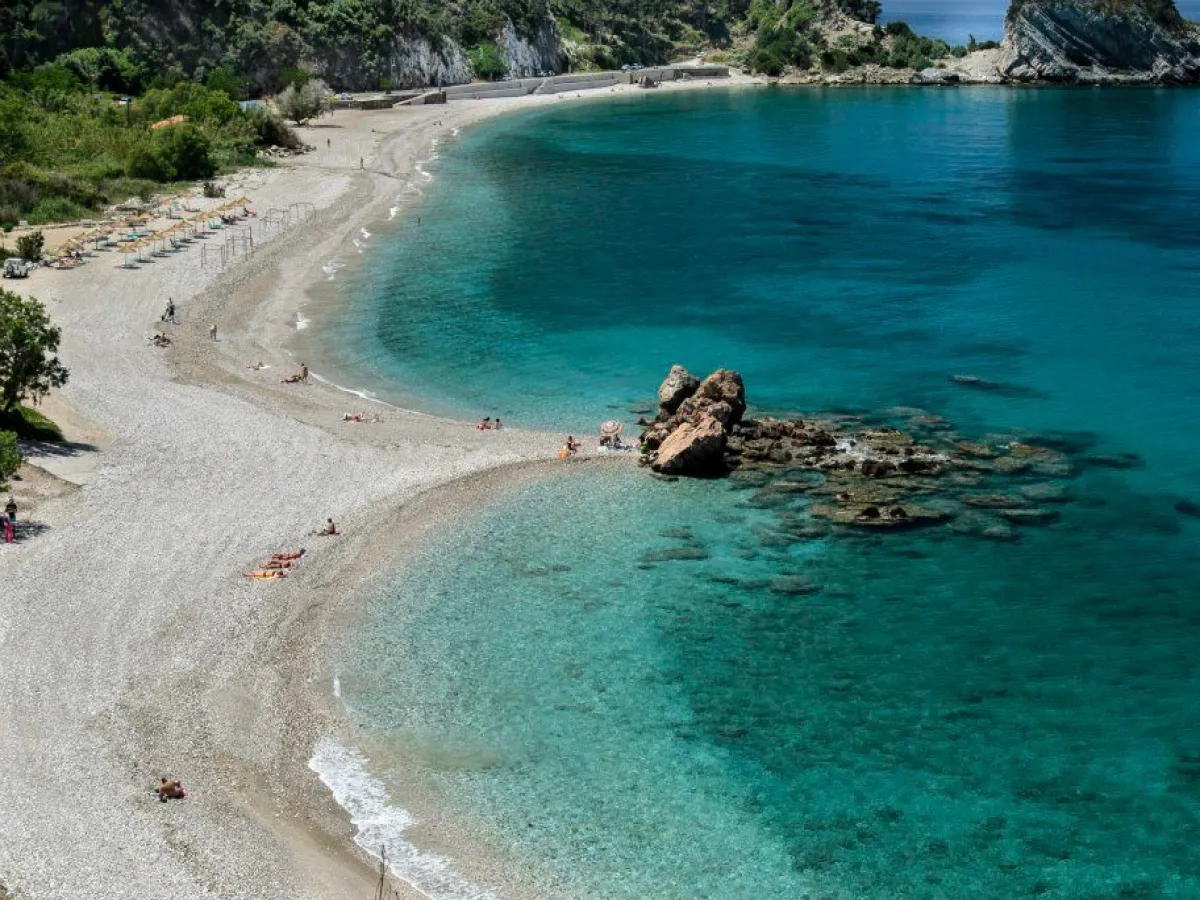
🏖️ Potami Beach near Karlovasi, Samos
A large pebbled beach with deep turquoise waters, a green gorge, organised facilities and Blue Flag status
Potami Beach is located in northwestern Samos, west of Karlovasi, in one of the island’s most impressive natural locations. The broad curve of the shore, the pebbles, the green slopes, the rocky formations and the open view towards the northern Aegean create a landscape with a powerful and distinctive character.
Behind the central section of the beach flows the stream known as Potami of Kastania, which was referred to in antiquity as Kerketeios. The route towards the gorge and the Potami waterfalls also begins in the same area.
📍 Location
The beach is located approximately 4–5 kilometres west of the centre of Karlovasi and only a few kilometres from the port. Access is via a paved road that continues west from Karlovasi towards the Potami area.
The settlement of Potami forms part of the Community of Karlovasi, belongs to the Municipal Unit of Karlovasi and is administered by the Municipality of West Samos.
The distance from Samos Town is approximately 35–38 kilometres, while the road distance from Samos Airport is estimated at around 45–48 kilometres, depending on the route followed.
🏝️ The Extensive Coastline
Potami is one of the largest beaches in the Karlovasi area. The total length of the shore is estimated at approximately 730 metres, with an average width of around 20 metres.
The form of the beach is not identical throughout its entire length. There are wider sections with more available space, narrower areas, rocky projections and small formations that visually divide the coastline.
Its considerable size allows visitors to choose between the more organised sections and free areas with a more natural character.
🏖️ The Shore and Its Composition
The shore is mainly pebbled, with rounded pebbles of different sizes, larger cobbles and stones close to the waterline.
Finer materials may be found in certain sections, but the general appearance remains that of a large pebbled beach.
The seabed consists mainly of pebbles and stones. Water shoes are particularly useful both for walking across the shore and for entering or leaving the sea.
🌊 The Water and Depth
The waters are clean and transparent, with colours ranging from turquoise near the shore to deep blue towards the open sea.
The seabed becomes deep relatively quickly, and the beach is not considered shallow. The slope may vary from one point to another, but caution is generally required for young children, inexperienced swimmers and visitors who do not feel comfortable in deep water.
Before moving away from the shore, swimmers should check the entry point and the prevailing sea conditions.
🌡️ The Cool Feeling of the Water
The water often feels cooler than at the sheltered southern beaches of Samos. This is especially noticeable close to the mouth of the stream and on days with northerly winds or waves.
The temperature varies depending on the season, sea currents and prevailing weather conditions.
🌬️ Northern Winds and Waves
Potami Beach faces the northern Aegean and is directly affected by northerly winds. Waves are common, particularly when the meltemi is blowing.
When the sea is calm, the water is exceptionally clear and swimming conditions are very good. When the waves become stronger, however, entering and especially leaving the water may become difficult because of the large pebbles and the slope of the seabed.
⚠️ Swimming During Strong Waves
The waves move the pebbles and can affect swimmers’ balance. Particular care is needed when leaving the sea, as the water flows back towards the open sea with force.
Rock formations and stones projecting from the water should be avoided when strong waves are present.
When the sea is heavily disturbed, the safest choice is to avoid swimming.
💎 Blue Flag 2025 and 2026
Potami Beach received the Blue Flag for the first time in 2025 and retained the distinction in 2026. The managing authority is the Municipality of West Samos.
The Blue Flag applies to a designated organised section of the coast, approximately 400 metres long. The distinction is associated with criteria concerning bathing-water quality, environmental management, cleanliness, visitor information and the required safety measures.
☂️ Organisation and Sun Loungers
Sections of the beach are organised during the summer season with umbrellas and sun loungers. At the same time, several free areas remain available for visitors who prefer to use their own equipment.
The considerable length of the shore provides different options, from the more organised areas close to visitor services to quieter sections towards the ends of the beach.
Prices and conditions for using the beach equipment may change from one summer season to another.
🍽️ Food, Coffee and Drinks
Seasonal dining establishments, cafés and beach bars operate on the beach and in the wider coastal area.
Visitors can find food, snacks, coffee, soft drinks and alcoholic beverages without having to return to Karlovasi.
Exact operating periods, opening hours and available services may change from one season to another.
🚿 Showers, Changing Rooms and Toilets
Showers, changing rooms and toilets are available in the organised section of the beach for the convenience of swimmers.
These facilities operate mainly during the summer season and are connected with the organised part of the shore.
Outside the main tourist period, some of the facilities may not be available.
🛟 Safety at the Beach
Basic safety and first-aid equipment is available in the area, particularly within the section included in the Blue Flag award.
Swimmers should always check the condition of the sea, as Potami is frequently affected by northern waves and the water becomes deep relatively quickly.
The presence of organised facilities does not replace personal caution or the constant supervision of children.
👨👩👧👦 Suitability for Families
The beach can be chosen by families, mainly because of its easy access, parking, organised facilities and the possibility of choosing between organised and free sections.
It is not, however, one of the easiest beaches for babies or very young children. The large pebbles, relatively rapid increase in depth and frequent northern waves require continuous supervision.
A visit is more suitable when the sea is calm and for children who can move safely over the pebbles.
🤿 Swimming and Snorkelling
On days when the sea is calm, the clarity of the water creates good conditions for swimming and relaxed snorkelling.
The most interesting points are close to the natural stones and rocky formations, where small fish and the structure of the stony seabed can be observed.
Snorkelling is safer close to the shore and only when wave activity is limited.
🏄 Sea Activities
The beach is mainly suitable for swimming, snorkelling and activities on the extensive pebbled shore.
Its exposure to northerly winds and frequent waves requires caution before undertaking any activity in the sea.
Visitors should choose calm days and remain at a safe distance from rocky areas.
🌳 Vegetation and Natural Shade
The area behind the beach is green, with trees, dense vegetation and slopes descending towards the coast.
This scenery creates a striking contrast between the green landscape and the deep blue sea.
Limited natural shade may be found at certain points behind the shore, but most of the beach is exposed to the sun. Visitors choosing a free section should bring their own umbrella.
🚗 Access
Access from Karlovasi is easy by car or motorcycle via a paved road.
The route follows the coastline west from the port and continues parallel to the beach.
Potami can also be reached by bicycle or on foot from Karlovasi, although the distance, summer heat and vehicle traffic should be taken into account.
🅿️ Parking Area
Free parking is available close to the beach, along with additional places where vehicles may be parked safely.
On busy days, spaces close to the organised section may fill up early.
Vehicles must not block the road, entrances, turning areas or access for emergency vehicles.
♿ Accessibility
Road access and the possibility of parking close to the shore make it easier for elderly visitors and people who cannot walk long distances to approach the beach.
The pebbled surface makes independent wheelchair movement towards the sea difficult.
There is no continuous stable pathway across the entire section of the shore or a dedicated system for independent entry into the water.
🌿 The Potami Stream and Gorge
The stream that reaches the beach passes through a densely vegetated gorge with plane trees, ferns and rich plant life.
The streambed and the shade of the trees create an environment completely different from the open pebbled shore.
The route towards the waterfalls begins close to the bridge and the mouth of the stream. From the entrance to the path, approximately 1 kilometre of walking is required to reach the first small natural pool.
The total distance to the wider waterfall area may reach approximately 2–3 kilometres, depending on the route followed.
💦 The Potami Waterfalls
The first section of the route through the forest is relatively manageable, but the continuation is not a simple walk along a fully prepared path.
Reaching the first waterfall requires entering and swimming through a natural pool with cold water.
Exploration towards the following points includes walking through the streambed, slippery stones and, depending on the chosen route, steep wooden steps or more difficult passages.
The experience requires water shoes, good physical condition and considerable care.
⛪ The Byzantine Church of the Transfiguration
Close to the beginning of the route towards the waterfalls stands the Church of the Transfiguration of the Saviour, an important Byzantine monument dating from the 11th century.
The church is considered one of the oldest surviving monuments on Samos and forms an important part of the historical and archaeological landscape of Potami.
A visit can easily be combined with the walk towards the gorge and waterfalls.
🏰 The Kastraki of Panagia at Potami
On a low hill close to the church lie the remains of the fortified complex known as the Genoese Castle or Kastraki of Panagia at Potami.
The monument recalls the importance of the area during the medieval period and adds particular historical interest to the route.
Access requires care, as certain points around the ruins are uneven and exposed.
⛪ The Chapel of Agios Nikolaos
On a hill near the beach stands the distinctive Chapel of Agios Nikolaos, known for its particular architecture and uninterrupted views over the shore and open sea.
The location is especially beautiful during the late afternoon and offers panoramic views of the beach, the rocky formations and the sunset.
The climb requires care, particularly when the sun is strong or the ground is slippery.
🥾 Hiking Routes towards the Seitani Beaches
Hiking routes towards Mikro Seitani and Megalo Seitani, two of the most important natural beaches of western Samos, begin from the wider Potami area.
The routes require suitable footwear, drinking water, sun protection and proper planning.
They should not be started late in the afternoon without knowledge of the route and sufficient time for a safe return.
🌅 Sunset and Atmosphere
The northwestern orientation and open view towards the sea make Potami one of the most beautiful places in the Karlovasi area at sunset.
The light over the pebbles, the rocky formations in the sea and the green slopes create changing views as the sun moves lower.
Despite the organised presence in certain sections of the shore, the landscape retains its powerful natural character.
🤿 What Is Worth Doing
Swim in the organised or free section, choosing a point with a safe entry and calm waves.
Use a mask and snorkel near the rocky areas only when the sea is calm.
Walk to the Byzantine Church of the Transfiguration and the remains of the Kastraki.
Follow the first, easier section of the route towards the green gorge.
With suitable physical condition and the necessary equipment, continue towards the natural pools and waterfalls.
Climb to the Chapel of Agios Nikolaos for views of the beach and the sunset.
💡 Useful Advice
Check the wind and wave forecast before visiting.
Avoid swimming when the sea is heavily disturbed.
Wear water shoes for the pebbles and stony seabed.
Do not leave young children without direct supervision, as the water becomes deep relatively quickly.
For the waterfalls, bring footwear that can get wet, swimwear and waterproof protection for your phone and personal belongings.
Do not attempt difficult passages in the gorge without good physical condition.
During the summer months, choose the morning for hiking and the late afternoon for swimming and sunset.
Do not light fires in the forest, gorge or near the beach.
Remove all rubbish when leaving.
⭐ Beach Characteristics
✅ Large pebbled beach in northwestern Samos.
✅ Located approximately 4–5 kilometres west of Karlovasi.
✅ Total coastline length of approximately 730 metres.
✅ Average width of around 20 metres.
✅ Rounded pebbles, cobbles and stones.
✅ Pebbled and stony seabed.
✅ Clean and transparent turquoise waters.
✅ The depth increases relatively quickly.
✅ Frequent waves because of exposure to northerly winds.
✅ Organised and free sections.
✅ Umbrellas and sun loungers during the summer season.
✅ Options for food, coffee, snacks and drinks.
✅ Showers, changing rooms and toilets in the organised section.
✅ Free parking close to the shore.
✅ Blue Flag in 2025 and 2026.
✅ The award applies to a designated section approximately 400 metres long.
✅ Suitable for families with caution and mainly when the sea is calm.
✅ Not ideal for babies and very young children when waves are present.
✅ Suitable for snorkelling in calm conditions.
✅ Located close to the Potami gorge and waterfalls.
✅ Located close to the Byzantine Church of the Transfiguration.
✅ Located close to the Kastraki of Panagia at Potami.
✅ Panoramic views from the Chapel of Agios Nikolaos.
✅ Starting point for hiking routes towards Mikro Seitani and Megalo Seitani.
✅ Particularly beautiful at sunset.



Add new comment